
Depth-oriented psychotherapy in San Antonio and online across Texas.
About Norman Klaunig, MA, LPC, NCC
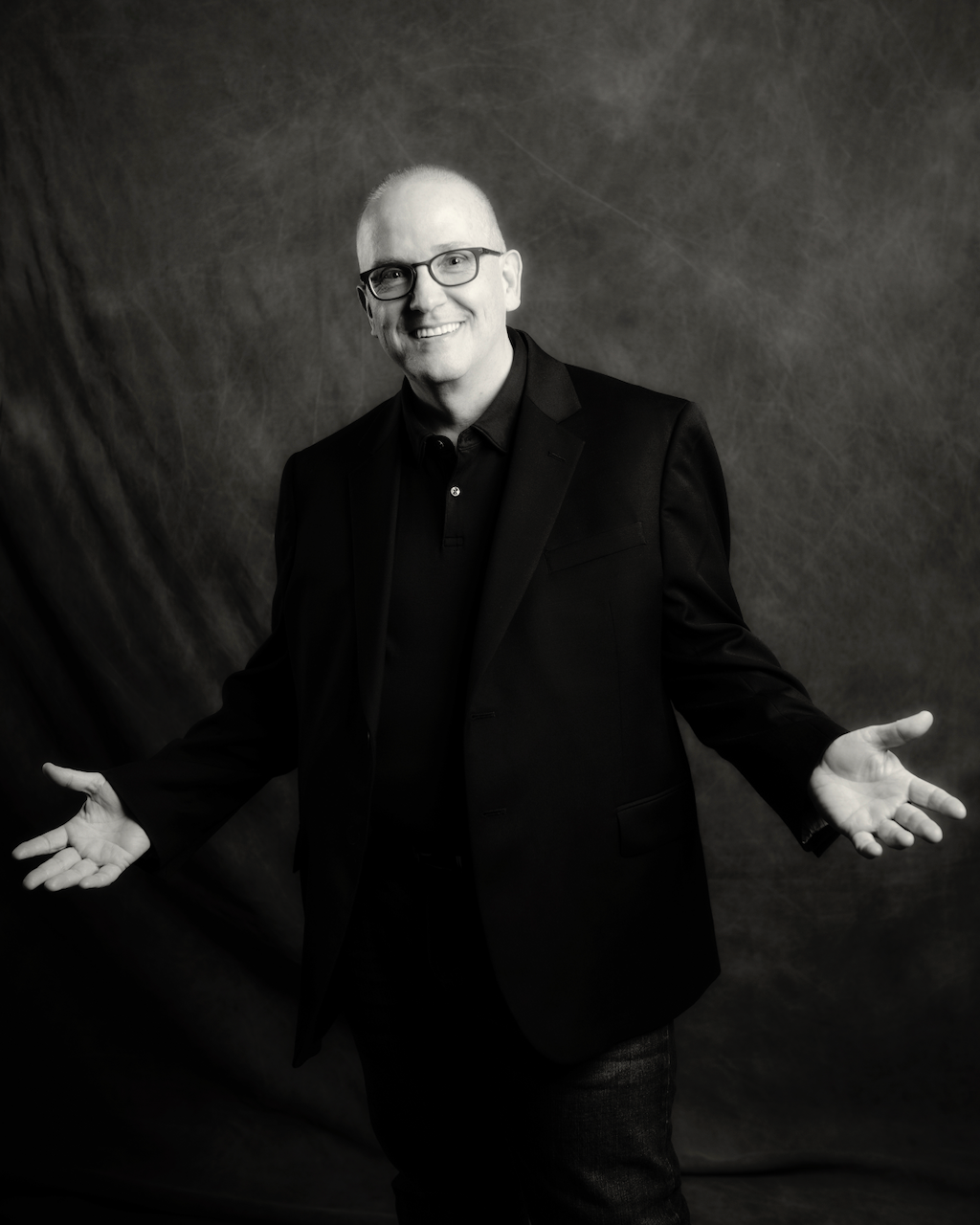
Move forward with hope, purpose, and joy!
Norman Klaunig, MA, LPC, NCC is a Licensed Professional Counselor (Texas LPC #89856) based in San Antonio. He offers depth-oriented psychotherapy online statewide in Texas and in person in San Antonio, working in English and German with adults navigating complex trauma, grief, life transitions, caregiving, illness and end-of-life concerns, religious trauma, spiritual emergence, near-death and other transpersonal experiences, existential questions, relationships, and meaning-making.
He welcomes clients of all ages, genders, abilities, races, heritages, sexual orientations, identities, and belief systems who want to move from pain to purpose.
At a glance
Practice: Norman Klaunig Psychotherapy PLLC
Areas of clinical focus: Complex trauma, grief, life transitions, caregiving, illness, end-of-life, religious trauma, near-death and other transpersonal experiences, existential and spiritual concerns
Theoretical orientation: Depth-oriented, existential, trauma-informed, transpersonal, spiritually integrative, integral, meaning-centered
Professional service: Academic and Research Committee, International Association for Near-Death Studies (IANDS); Spiritual and Religious Values Committee, ASERVIC
Publications:Journal of Near-Death Studies (near-death experiences and terminal lucidity) and Vital Signs (IANDS magazine)
Therapist: Norman Klaunig, MA, LPC, NCC
License: Texas LPC #89856 | NCC #1722534
Office: 1528 W Contour Dr, Suite 102, San Antonio, TX 78212
Service area: Online statewide in Texas; in person in San Antonio
Languages: English, German
Insurance accepted: BCBS, Curative, United Healthcare, and Medicare (traditional Medicare and Medicare Advantage plans from BCBS and United Healthcare)
How I came to this work
I have lived on three continents, worked in the corporate world, and run my own businesses. Thus, I arrived at this work later in life than some of my colleagues. Each of those experiences taught me something about what people carry quietly, and about how much of what shapes a life is invisible until something opens it.
Therapy, for me, was first a personal path. It became a professional one when I realized that the territory I cared most about — meaning, mortality, the long work of integrating what cannot be undone, the strange and sometimes sacred experiences that don't fit anywhere — was the same territory my clients needed someone to walk with them on. The work is, in part, the work of staying in the room with what most people will not.
How I work
I work in depth, not on the surface. Most of the people who find me have already tried other approaches and are looking for something underneath symptom management. They want to understand the patterns that keep arriving, the questions they actually want to ask, and what the difficult thing in their life is asking of them.
The work draws on existential, depth-oriented, trauma-informed, and transpersonal traditions. Two frameworks anchor how I think about this work: Ken Wilber's Integral Theory, which holds the developmental and multi-perspectival dimensions of human experience, and Paul T. P. Wong's Meaning-Centered Therapy, which addresses the search for meaning in the face of suffering. I am EMDR-trained, IADC®-trained, and hold a Certificate in Traumatic Stress Studies through Bessel van der Kolk's Trauma Research Foundation. I am also trained in Solution-Focused Brief Therapy (SFBT) at the Diamond Level 1 and in TeleMental Health practice. I integrate breathing techniques, parts work in the spirit of Internal Family Systems, mindfulness-based approaches, and other tools as appropriate. These methods are tools, not a fixed protocol. The work follows the person, not the method.
I have published research on near-death experiences and terminal lucidity in the Journal of Near-Death Studies, and I continue to be involved in academic work in this area. Near-death experiences, spiritually transformative experiences, and end-of-life phenomena are an area I take seriously as both clinical territory and research interest. Clients who have had such experiences can speak about them here without being explained away.
I work equally well with clients who are devout, deconstructing, secular, agnostic, or marked by experiences they don't yet have language for. Religion and spirituality are welcome in the room when they belong there. They are not required.
I see clients in English and German.
My clients
The people I work with are usually past the point of looking for quick reassurance. What they are looking for is a place that can hold the actual weight of what they are carrying.
Many are men in their 20s and 30s working through trauma, relationship patterns, identity, or career direction. Others are men in midlife and beyond who come to therapy when something finally makes it unavoidable — a health scare, a loss, a relationship in trouble, or a quiet recognition that the way they've been living no longer fits.
I also work closely with women across adulthood: younger clients navigating early-life trauma, relationship patterns, and life direction,
and women in midlife and later life facing caregiving, grief, identity shifts, or long-buried trauma surfacing later. Some have been in therapy before. For others, this is their first time.
What my clients tend to share is a willingness to engage with the deeper layers of what they are facing — and a wish for substantive work rather than coping techniques alone.
Two populations I work with closely have their own dedicated pages: therapy for men for adult men at any life stage, and therapy for therapists for mental health professionals seeking their own depth-oriented work.
Conditions and concerns I treat
Complex trauma (CPTSD) and Post-Traumatic Stress Disorder (PTSD)
Childhood, developmental, and relational trauma surfacing in adulthood
Acute, prolonged, complicated, anticipatory, traumatic, and disenfranchised grief
Pet loss and non-death loss (loss of health, role, relationship, faith, home, or chapter of life)
Caregiver burnout, anticipatory grief, and ambiguous loss
Religious trauma, spiritual abuse, and faith transitions
Near-death experiences (NDEs), spiritually transformative experiences (STEs), spiritual emergence, and spiritual emergency
Concerns around terminal lucidity and other end-of-life phenomena
Existential anxiety, mortality concerns, and meaning crises
Major life transitions: career change, divorce, retirement, parenthood, empty nest, immigration, leaving a faith community
Midlife and later-life identity shifts
End-of-life concerns and serious illness (yours or a loved one's)
Identity, authenticity, and the search for purpose
Approaches and modalities I draw from
Existential and depth-oriented psychotherapy
Trauma-informed therapy
EMDR (Eye Movement Desensitization and Reprocessing) — EMDRIA-approved training
IADC® Therapy (Induced After-Death Communication)
Internal Family Systems (IFS)-inspired parts work
Mindfulness-Based Cognitive Therapy (MBCT)
Written Exposure Therapy (WET)
Emotional Freedom Technique (EFT Tapping)
Solution-Focused Brief Therapy (SFBT) — Diamond Level 1 Certification
Spiritually integrated and transpersonal counseling
TeleMental Health (secure online video therapy)
Training, credentials, & professional service
-
Licensed Professional Counselor, Texas, License # 89856
National Certified Counselor (NCC) # 1722534
Doctoral candidate, Counselor Education and Supervision (CACREP-accredited), University of the Cumberlands — expected December 2026
M.A. in Clinical Mental Health Counseling (CACREP) – University of the Cumberlands
MBA in Business Administration (AACSB) – Texas A&M University-Commerce
Certificate in Traumatic Stress Studies – Trauma Research Foundation (Bessel van der Kolk)
EMDR trained (EMDRIA approved) – Insight Counseling Center (Roxanne Grobbel)
IADC® Therapy trained – César Valdez
SFBT Diamond Level 1 Certification – Elliott Connie
TeleMental Health certifications – Telehealth Institute
-
Published in the Journal of Near-Death Studies
Member, Academic and Research Committee — International Association for Near-Death Studies (IANDS)
Presented at IANDS conferences and symposiums on terminal lucidity and the use of NDE narratives to prevent suicidal ideation
Member, Spiritual and Religious Values Committee — Association for Spiritual, Ethical, and Religious Values in Counseling (ASERVIC)
-
American Counseling Association (ACA)
Texas Counseling Association (TCA)
Association for Spiritual, Ethical, and Religious Values in Counseling (ASERVIC)
Association for Counselor Education and Supervision (ACES)

What it is like to work with me
Clients describe me as an empathetic listener and a direct guide — willing to push when it serves the work, unwilling to pretend something has been resolved when it has not. They appreciate my honesty, my openness, and the way I sit with what is brought into the room. Clients of widely different backgrounds and stories tend to say they feel seen, heard, and not handled.
I take the long view. I do not promise that therapy will be brief, and I do not pretend that the depth-oriented work I do is the right fit for everyone. The work asks you to stay with what is hard without rushing to resolve it. Where it is the right fit, it tends to reach what other approaches have not.
What I bring to the room is shaped by my own work with the same questions clients arrive with. That is part of why depth-oriented therapy through an integral lens is what I do.
For fees, insurance, telehealth setup, and in-person availability, see the FAQs.
Get in touch
Ready when you are
Schedule a free 15-minute consultation.
Click the button above to choose a day and time for a free, confidential consultation or schedule a session.

Get to know me.
Therapy from the Heart
“It is only with the heart that one can see rightly”
You’ve read the books and searched the internet, but haven’t been able to bring real change into your life on your own. Now you are ready to do something about it and get help.
You are looking for a therapist who engages with you, who listens, but also challenges you when needed. You are looking for someone to walk the path to purpose with you—a path that is uniquely yours. You want a therapist who helps keep you on the tracks you laid for yourself—a partner and guide for the big questions of life.
You don’t need someone who uses the same approach for everyone they see, nobody who works with a fixed formula. You don’t expect the therapist to do the work for you and want to get to the root of whatever might be holding you back.
You are looking for me.
move from pain to purpose
—
move from pain to purpose —